GSA > Get Sensational Attention
Overview
School-wide (or family) video-animation program
We must shift our understanding from the brain to the body, and adopt a new worldview that compels us to think holistically—utilizing the whole before dissecting the parts. The “brain” is in more parts of the body than the head.
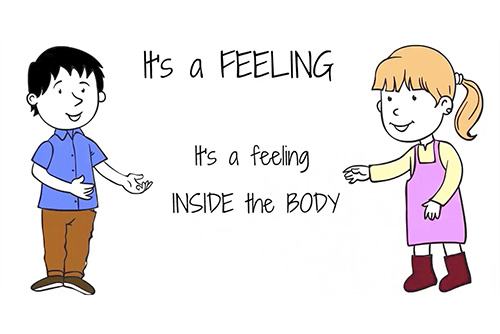
Get Sensational Attention (GSA) is a video animation program to introduce children to their “inner-with their outer me” through awareness of the Sensory Body (SB). The SB is a sense, yet hidden from awareness. It is a feeling that is the “sense” from a physicalness of compassion. It is the sense that can feel two directions at one time. When the opposing forces of stress meet in the SB, it opens up a third perspective.
The practice sees something it didn’t see before. It often reveals a behavior that occurs not just in children, but also in parents, teachers, researchers, or administrators. The insight reveals a remarkable difference in the situation and why the children are behaving the way they are.
We teach the SB through, first, a fun movement game to learn the “Home Breath.” Once the children learn from the Home Breath, it is guaranteed to save time, improve effective social-emotional learning, and lessen bullying. Children learn about themselves and others from their bodies to their minds. Refer to what the Principal of our pilot school had to say about the Home Breath (Testimonial).
About the Course
(√) Skills Your Child Will Gain
Centeredness
Better Communication
Awareness of Self and Others
(√) Applications
Bullying
Before test taking
Before performances
When in conflict and conflict resolution
Stress while learning academic curriculum
During physical education games
(√) Instructor
Catherine Rosasco-Mitchell
Wellness Through Movement Founder
Feldenkrais® Practitioner, 1987- present
And the help of educational professionals and parents
(√) Testimony
“I’ll preach it until the day I die. If you are going to teach anything to improve school culture and student behavior, teach them the Home Breath.”
Principal Danny Garcia, Kohala Elementary
(√) Research: additional information for administrators
“The brain’s low-level sensory and motor circuits do not just feed into cognition; they are cognition.”
Scientific American Mind, Jan./Feb. 2011, p. 39-45
Six Body-To-Brain Strategies presentation
International Brain, Movement, and Cognition lecture, Movement Is, 2018, Harvard
To Get Started: Pick a GSA Track
GSA program Long Track
Change a Life
5-6 Hours • 15-20 Minutes Once a Week For Six to Eight Weeks
____________________________________
GSA program Short Track (Sample)
Change a Stressful Moment
________________________________________________________________________
(√) Reference Book
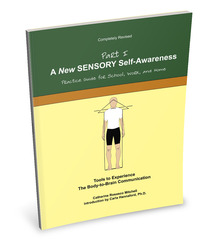
Fun movement games, from the body to the brain, for children
These movement games are for groups of children
For 5-10 years of age
Learning From Inside Out – The Sensory Body
The book helps teachers and parents open the door to a new sense —the Sensory Body (SB) —by offering more games. The SB is a bridge. The “bridge” is a sense. The sense can feel the synthesis of the heart and head, and the physicalness of compassion. This “compassion” is not just for others, but also for the behaviors about which the self is unknown. The book introduces how to build a bridge for your children from the body’s sensations to thinking.
This dynamic, interactive series of 12 lessons shows participants how to feel their bodies’ influence on their thinking and feelings. Tested for 8 years in elementary schools, with 500 children a year, we saw significant changes in cognitive behavior. The lessons are designed to increase awareness, which can improve in-classroom management and school culture. Most importantly, the lessons teach children to think from the heart.
Participants learn to shift their perception from the outside to the inside, cultivating dual attention from the heart. By enhancing a clearer sense of self through the body, relationships with others, and the outer world come into harmony. Why? The heart is a brain. (See HeartMath research)
An array of self-observing techniques uses breath, sound, and movement based on the Feldenkrais® Method. Feldenkrais® work draws on physics to develop bodily awareness of the interconnections among the mental, emotional, and physical.
________________________________________________________
Need to improve
cognitive function?
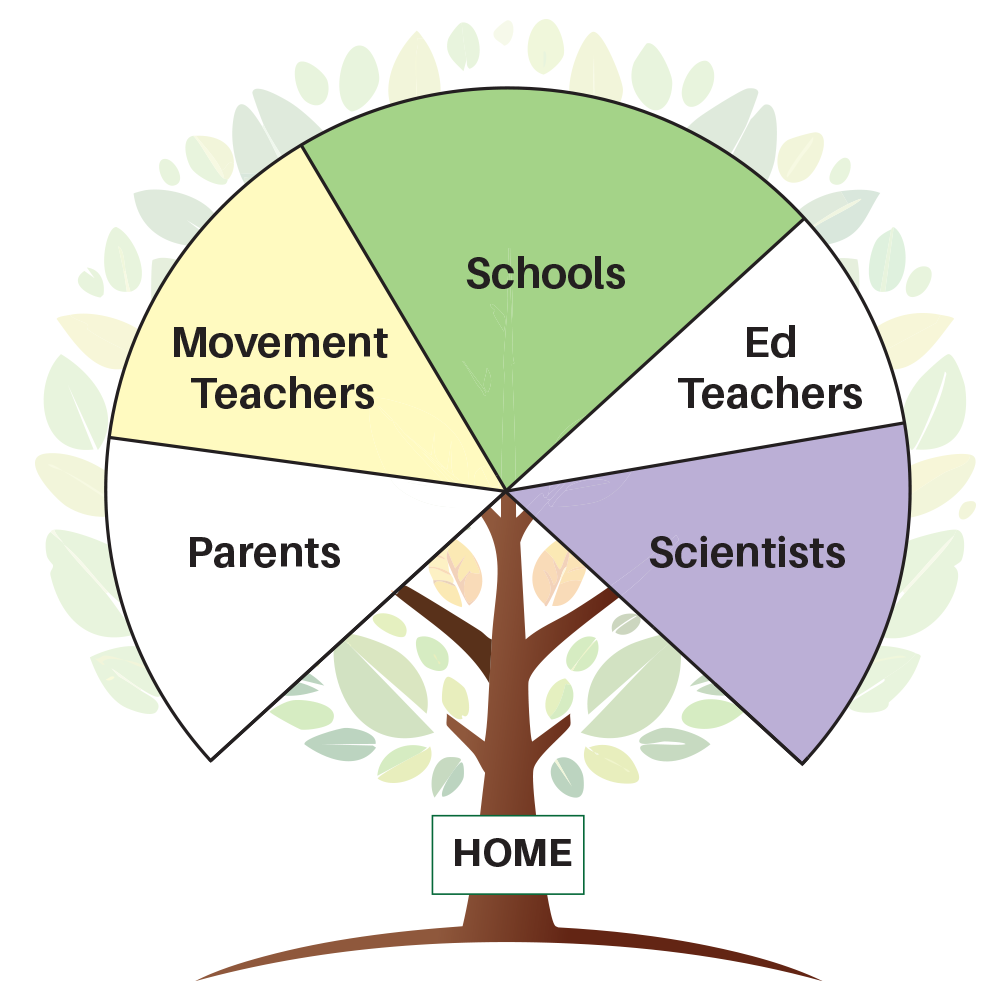
Part II for Schools needs a movement teacher
Part II for Movement Teachers
Part II for Scientists needs a movement teacher
If we get requests we will put the lessons online.