Principal of Our Pilot School
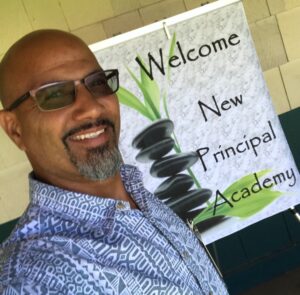
Principal Danny Garcia, Kohala Elementary School
“I’ll preach it until the day I die. If you are going to teach anything to improve school culture and student behavior, teach them the (Get Sensational Attention program) Home Breath.”
Claims WTM Resulted …
…Higher academic achievement
…Improved social-emotional well-being
…Eliminated bullying school wide
“The Wellness Through Movement works! This program has improved our behavior and learning in our school. We incorporated the mindfulness WTM program (Get Sensational Attention (GSP) into our daily culture here at Kohala Elementary School (KES), calling the Home Breath, “Pono Breath.” We used also used [Home Breath to teach] “Pono Space,” respectively. Our primary focus here at KES is to develop young children into young adults with a strong sense of self – physically, mentally, and emotionally. Through the training, both in movement and mindfulness [with the WTM program] we have seen individual students achieve success in overcoming anxiety and other behavior issues including improvements in listening and communication. In addition, there has been a school-wide decrease in poor behaviors and referrals.”
“Our teachers use the “Pono Breath” with the students daily, and our school counselor has incorporated WTM concepts into her practices. As the school leader, I personally believe in the WTM methodology and its importance in primary education. I say, teach the body first then the mind will follow…”
Mahalo Nui Loa,
Principal Danny P. Garcia
Kohala Elementary School is our Pilot School
Note: Kohala Elementary School was our pilot school for eight years.
Researcher

Cathy Kerr, Ph.D., Brown University
“Please meet with Catherine Mitchell. You will have a lot to discuss about awareness. Catherine studied with Moshe — she is the real deal …. and is a brilliant knowledgeable gem….”
Note: Wed, Jan 27, 2016 at 10:24 AM email. Dr. Kerr has permitted us to share that Brown University and her research used the information from the WTM program to understand the Sensory Body. She also consulted with us when she met the Dalai Lama regarding the Sensory Body.
Elementary Teacher
Cherry Sanford
“…the majority were better equipped to take responsibility for their behavior.” Cherry Sanford
As an assistant in the Wellness Through Movement Program at Kohala Elementary this spring, I had the opportunity to witness evidence of progress in the children’s physical and emotional health and well being. While engaged in a variety of fun and enlivening movements, I observed children in the process of learning to listen to their own bodies and emotions.
After many years of teaching experience, I can easily see that elementary aged children become good at responding to external cues. Their behavior is continually guided and directed by a series of rules, set by teachers or administrators. While rules and guidelines for behavior provide a necessary structure of safety and protection, children often do not have the opportunity to become practiced in the process of self examination and inquiry.
What I noticed about The Wellness Through Movement Program is that it taught children to ask questions about themselves, their bodies and the world around them. It taught them to observe what they experienced with their body-sense and to be curious about what they discovered. Finally, it gave them strategies they could use in their daily life that would enhance physical activity or help with challenging emotional situations.
I observed children in the program learn to ask questions pertaining to their body such as “Am I thirsty?” “Do I need water?” “How is my body responding differently now than it did at the beginning of the class?” After prompting by the instructor, they also asked questions about their emotions such as “What am I feeling right now?” “Am I upset?” What do I need?” Once the “home breath” was introduced, they began to ask, “How would the home breath help this situation?” “Am I ‘in home’ right now?”
In this way, children began to practice an internal process from their body sense to assist and direct their choices. Though it seemed awkward and foreign to them at first, they started to talk about ways to use it, such as to enhance performance at swim practice or to help solve a conflict with a sibling at home. Because the children began to see the connection between their choices and the consequences produced by their actions, the majority were better equipped to take responsibility for their behavior. A kindergartener in the program, for example, initially did not follow directions or respond verbally to the instructor or assistants. By the end of the program, he was able to pay attention and follow directions 75% of the time and was answering questions in complete sentences. The fourth and fifth graders gained skills to problem solve among themselves when disagreements arose.
In my role as an assistant, it was exciting to watch children develop skills that would enhance their physical and emotional well being for a lifetime!
Commentary from Retired Elementary Teacher of 27 years total (12 full time, 15 part time)
Movement Teacher
Andy Russel
“After documenting the Wellness Through Movement program at the Kohala Elementary School, it is obvious that learning from the Sensory Body, the movement positively affects cognitive performance and general well-being. What made the results from the Wellness Through Movement program unique was how each student developed personally and in the group; shy students became more expressive, boisterous students became more quietly engaged, and the entire group benefited from the improved dynamics. This allowed for more spontaneous involvement from all the students rather than the group developing a habitual hierarchy that would have benefited some and stifled others. For this reason, I think the WTM program is distinct from and more beneficial than most physical education programs used in schools presently and has the potential to be used in an integrated way in any situation rather than only being used as a separate and isolated practice.”
Parents & Grandparents
Jacque Waters, Grandmother
Head Injury
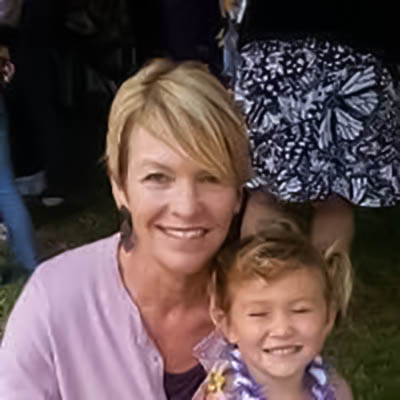
“Anuhea fell out of her crib on her head as an infant and was one-year-old when I saw some trouble. When Anuhea started crawling she was not using one side of her body. After three sessions with Catherine, Anuhea’s spinal movement, head lifting and rotating, limb kicking, and crawling, became coordinated. She began to grab her toes, roll back to side-side, and shift her weight on her feet. Then a most exciting change happened when she was able to sit in a healthy posture and her mood improved. She wasn’t fussy, and her confidence and emotional well-being just kept getting better and better. We are so grateful. Mahalo Catherine.”
Erica R., Mother
Cerebral Palsy in a three-year-old
“I wouldn’t hesitate to recommend Catherine to anyone wanting or needing to improve function on any level. She is especially indispensable to children with challenges because that is where the depth of her heart lies. Her extensive work in helping children through schools is so important and necessary. The children who experience the Feldenkrais Method – and thus themselves – will excel, as I have seen firsthand with my son.”
Thank You Catherine,
Erica R., Mother
What Children Say
Important Note: The Home Breath
We are not just using breath. Breath is used to feel their Sensory Body.
4th Graders • Kohala Elementary School, Hawi, HI
“I use the Home Breath when I ...
…get confused in a new direction.”
… am frustrated.”
…want to get energy.”
…do a test.”
…am doing homework.”
...before my reading.”
…am mad and need to calm down.”
…am nervous.”
3rd Graders •Parker Elementary School, Kamuela, HI
“When I go see my grandma in Massachusetts it’s a 9 hour flight and I did the Home Breath to help me sleep.”
“I remember to do the Home Breath when I have a lot of energy.”
“I use the Home Breath when I get frustrated when my sister or brother are bugging me.”
“I do the Homebreath and Pancake Body when I get frustrated. It makes me feel better and hungry.”
“I use the Home Breath when I really get mad at my mom.”
“When I get frustrated and scared I do the Home Breath.”
“When my brother screams and cries I go in my bed and do the Home Breath.”
Children • 5 to 10 Years Old
“I have to move around, if I move around it helps me remember.”
“When I can’t move around, it’s harder to think, cause I need to move to think and that’s why I appreciate the class cause we can move.”
“Sitting makes me bored when I can’t move around, like in math class. If I don’t move around, my brain can’t work correctly. When I sit around, I forget stuff.”
“When I do Panda Bear Roll and circle around, it makes me feel funny and relaxed instead of mad and sad.”
“When I do the Panda Bear Roll, it makes me feel funny and relaxed.”
“I taught my little brother Panda Bear Roll. It helps us exercise indoors on a rainy day and makes me feel kind of good in my heart.”
“I liked the stairway to heaven (rope ladder on ground) because it makes me feel still connected to my grandma that died.”
“I still do the Panda Bear Roll because it makes me feel different, each time my body keeps changing.”